

Conversations With A Monk — Chapter 2: From Achievement To Alignment
A series exploring timeless wisdom for modern life

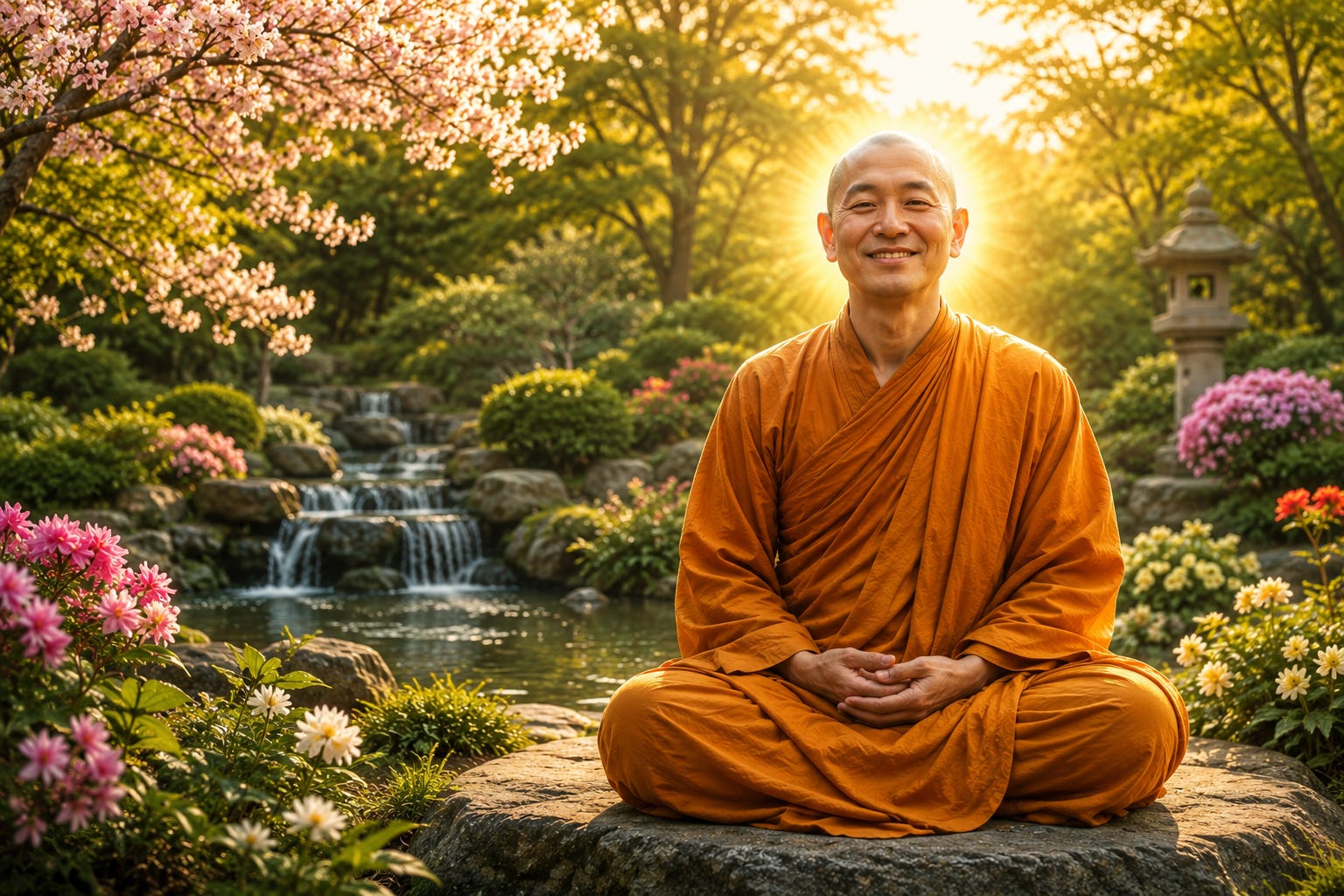
Aryan began to feel a strange calmness in the monk’s company.
He confided in him further, “I have devoted years to building my career, hoping that one day I’ll lead my company, enjoy financial freedom, and leave behind a legacy that outlives me. I want to be remembered as someone who truly made something of himself.”
The monk listened without interruption.
After a long silence, he asked,
“If nobody applauded you, would you still choose this life?”
Aryan frowned. “What do you mean?”
“Suppose there were no promotions, no awards, no recognition, no relatives comparing you with others. No one would know your name. Would you still work as hard for the same goals?”
Aryan stared at the potted plants around him.
“I... don’t know.”
The monk smiled. “That is an honest answer.”
Another silence passed.
“Most people believe inherited desires are their own. They borrow ambitions from parents, peers, advertisements, and society. They spend decades climbing a ladder without ever asking who placed it there.”
Aryan asked immediately: “So is ambition wrong?”
The monk replied serenely:
“No. Unexamined ambition is dangerous.”
He picked up a dry leaf lying next to him.
“This leaf moves wherever the current takes it. Most lives are like that—carried by the current of comparison.”
Aryan looked thoughtful.
The monk gently continued: “I want you to understand, many of our desires are imposed by the ego. Ego is the sense of separate self or “I”, within us. The one that constantly asks, ‘How do I appear? Am I ahead? Am I admired? Am I enough?’ That is the ego.”
Aryan nodded slowly.
“What is wrong with the ego?”
“Nothing. It is a useful servant but a terrible master.”
“The ego builds an identity from possessions, titles, achievements, and opinions. Because these are temporary, it lives in constant fear of losing them. So even after success, it whispers, ‘More.’”
Aryan thought of every promotion that had brought excitement for only a few weeks before anxiety returned.
The monk shared some nuggets of Wisdom.
“The Bhagawad Gita says:
prakṛiteḥ kriyamāṇāni guṇaiḥ karmāṇi sarvaśhaḥ
ahankāra-vimūḍhātmā kartāham iti manyate
“All activities are carried out by the three modes of material nature. But a person whose intelligence is bewildered by the false ego begins to think, ‘I am the doer.’”
The person thinks:
I am my job.
I am my achievements.
I am my failures.
Identifying himself with external measures of success, he loses his peace, thus.”
The monk took a slight pause to invite reflection.
“Now, contemplate another jewel of Wisdom from the Bhagawad Gita:
āpūryamāṇam achala-pratiṣhṭhaṁ
samudram āpaḥ praviśhanti yadvat
tadvat kāmā yaṁ praviśhanti sarve
sa śhāntim āpnoti na kāma-kāmī
“Just as the ocean remains undisturbed despite countless rivers flowing into it, the wise person remains unmoved despite the endless stream of desires and experiences that arise in life. True peace comes not from constantly chasing material desires but from a deep connection to the Self —which is already full just like the ocean.”
Aryan remained silent.
“Understand the difference, Aryan:
“The ego asks, ‘What can I become so that I matter?’
The spirit asks, ‘What am I, beneath everything I have become?’”
“For years,” the monk said softly, “you have been trying to add something to yourself—wealth, status, recognition—all this, believing that completeness lies outside of you.”
Arjun stared at the blades of grass in front of him.
For the first time, he wondered whether every goal he had chased was an attempt to convince himself that he was enough.
The monk smiled, “If you are not connected to the soft, steady voice of spirit, the loud voice of ego will easily have you in its grips.
When desire arises from ego, every achievement creates another hunger.
But when action arises from spirit, work becomes an expression of fullness rather than a search for it.”
In the quiet that followed, Aryan realized he had spent his life asking the world to tell him who he was, while never once asking that question to himself.
A thought flickered through his mind, disturbing him.
“What if I discover that this life I have built was never my dream? My parents wanted me to choose security. Society valued prestige and titles. My friends chased promotions, and so did I. What if all my desires are borrowed desires, must I resign tomorrow?”
The monk laughed softly.
“Running away is also an action of the ego.”
Aryan looked surprised.
“The ego says, ‘Become a CEO and you will be happy.’ When lasting happiness doesn’t come, it whispers, ‘Become a monk and you will be happy.’ It always promises fulfilment in the next identity. Do you see, it always postpones your happiness.
Aryan, if you wonder whether the life you have built was your dream or not, then pause, and take some time to ask yourself who you really are. What are your deepest values? What does Aryan truly love doing, and would do even if no one paid him to do it? What would he stand up for, even when it is difficult? What actions and activities bring him joy and a sense of inner aliveness? These questions take one deeper towards one’s true Self, or spirit nature.”
Once more I ask you, “If the applause stopped, what would you like to carry on doing?””
Aryan began to ponder deeply.
“Aryan, you do not have to give up everything you have built, but maybe you need to stop relying on those things to give you your identity.”
Aryan nodded.
“Do not ask, ‘What job should I have?’
Ask instead, ‘Who am I while doing this job?’
Are you anxious, comparing, proving, collecting applause? Or are you serving, creating, learning, and growing?”
Aryan remained silent.
The monk continued,
“If tomorrow you become a writer while still craving validation, you will suffer.
If you become a teacher while seeking admiration, you will suffer.
And if you become a monk while secretly wanting disciples, you will suffer.
Changing roles without changing consciousness is like painting over cracks without repairing the foundation.”
Aryan began to contemplate deeply.
The monk gave him an endearing smile and continued:
“Stay where you are Aryan, and observe.
Work without making every task a referendum on your worth.
Remove the need for approval, to outperform everyone.
And remove the fear of falling behind.
When the ego’s noise settles, something remarkable happens.”
“What is that?”
“You begin to hear the quieter voice of spirit.”
“It gently asks,
‘Where can I express my gifts?’
‘How can I serve?’
‘What kind of work allows me to be fully alive?’
Its guidance is calm, not desperate.
Carry on with your responsibilities, support your family and perform your work with excellence.
But every day, create a little space for what makes your spirit expand—writing, teaching, healing, music, serving, building, whatever it is that beckons you.
If that calling is genuine, it will grow stronger without force.
Then, if you leave, it will not feel like escaping your old life.
It will feel like naturally outgrowing it.”
The monk looked toward the horizon.
“The spirit does not ask you to abandon the world.
It asks you stop abandoning yourself while living in it.”
The Monk’s Inner Mastery Method
Know-Yourself Ritual
Make two columns in your diary.
On one side, list down: My Dreams
On the other side, list down: Society’s dreams for Me
Close your eyes for two minutes and ponder on each list.
Do this every day, until you can clearly differentiate between your authentic self- desires which are aligned with spirit, and your created/false self- desires which are fueled by ego.
Awareness is key.
Visualization Practice
Take five minutes and sit comfortably in meditation.
Close your eyes and take deep breaths, deep inhales followed by deep exhales.
Now, visualize removing layers of expectations from your shoulders. Imagine, dark colored heavy energy of burdens leaving your shoulders and exiting towards your back.
Keep breathing. Now visualize white, healing light filling you up with each breath. Continue breathing deeply.
Open your eyes when you are ready.
Challenge
Question one major goal this week. See how you are feeding the goal.
Are you feeding it through comparison, need for more prestige and power, praise and applause?
If so, don’t judge yourself. Simply recognize this.
Now, try to align your goal with your spirit. Ask yourself: how can I serve, create, learn and grow through this goal of mine?
Don’t judge. Don’t shift goals. Just reorient.
The conversation paused here. The lesson did not.
Until next time, sit with this question:
“If nobody applauded me, would I still do this?”
I love how you’ve written this like a novel you can’t put down, with the teaching tucked inside the story so gently you almost don’t notice it until it lands. The reflection and meditation at the end feel especially powerful for those of us in midlife who’ve wrapped so much of our identity around a role or a résumé—approaching retirement, or watching kids leave home, and suddenly realizing we don’t quite know who we are without that name tag. It’s such a compassionate invitation to sit with those questions before life forces the answers on us.
Absolutely agree with making room for what expands your spirit, this is such a great read, thank you for sharing!